Amaia’s Sister’s Empty Grave
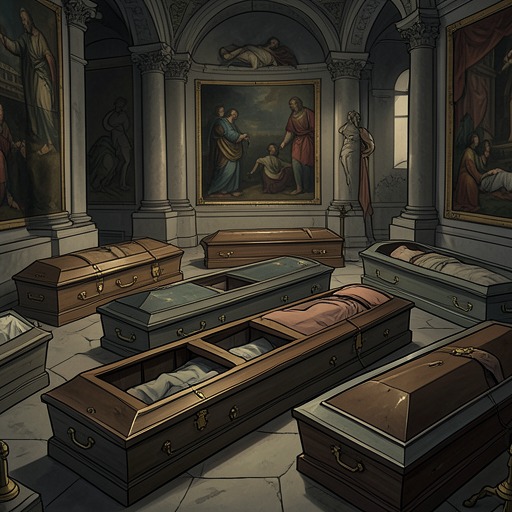
Ofrenda a la tormentaAmaia’s Sister’s Empty Grave is the unverified burial place of Amaia Salazar’s sister and one of the investigation’s most consequential absences. Its emptiness is not merely a failure of the grave to contain a body: it exposes how official records, family testimony, and the material evidence of burial can contradict one another, leaving a child’s fate unresolved.
Identity and Documentary Record
The investigation connects the grave to Ainara Martínez Bayón, whose birth certificate records her official birth in Elizondo on March 12, 1979. The certificate describes a home birth, naming Argi Beltz and Orabidea, and bears Hidalgo’s signature. But the corresponding record of death is missing: there is no death certificate in the civil registry or family record book, and the investigation finds no hospital record of her death in England, no autopsy record, and no trace of the notification that would ordinarily have followed the death of a Spanish child abroad. Amaia is still checking passport records, which are difficult to search because they were not yet computerized.
These gaps do not, by themselves, establish what happened to the child. Their force comes from accumulation: the official account of a death abroad has no matching documentary trail, while the grave associated with the sister is empty. The distinction between a missing record and proof of a particular fate remains important; the evidence undermines the account without yet supplying a complete alternative.
The Grave Among Other Clues
When Sarasola discusses the possibility that an ancient guardian has been awakened, Amaia’s thoughts gather around a sequence of violations and absences: the desecrated family itxusuria, the stones on the table rock, her sister’s empty grave, and the dark down on the head of Esparza’s child. In that conversation, the grave becomes part of a pattern that Sarasola interprets as evidence of an extraordinary offense and an offering to evil. The novel presents that interpretation as a hypothesis shaped by the investigation’s disturbing clues, not as a physical explanation established by the grave itself.
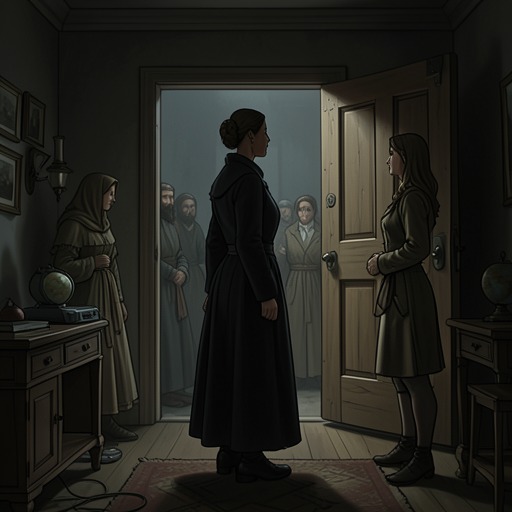
The empty grave also appears in the story of a little girl seen crossing the meadow between Argi Beltz and Lau Haizeta, and alongside the memory of altered death certificates associated with Nurse Hidalgo. In Amaia’s growing reconstruction, the grave is therefore tied both to a specific child’s uncertain fate and to the possibility that records were manipulated to make deaths appear settled.
Maternal Testimony and the Cost of Closure
The case of Yolanda Berrueta gives the empty grave a painful parallel. A priest confirms that Yolanda repeatedly comes to the church, convinced that her children’s bodies are not in their tomb; he believes her children were buried there because he officiated at the funeral and watched the coffins lowered. He respects the force of maternal instinct, but his certainty about the ceremony cannot answer what is actually in the graves. Later, Yolanda acknowledges that confusion and medication led her to mix up the coffins, yet insists that her baby’s body was stolen.
When Amaia apologizes for the mistake that halted the opening of Yolanda’s children’s tomb, Yolanda answers that the pause had a consequence beyond her own distress: without the investigation, no one might have discovered that one child was missing or listened to the woman in Elizondo who was also missing her little girl. Her response makes the grave a point of connection between families whose losses had been dismissed or treated as settled.
Narrative Significance
The grave forces the investigation to resist easy closure. A certificate records a birth but not a death; a funeral may be remembered as proof of burial, yet a parent continues to doubt what lies beneath the stone. The object’s evidentiary power comes from that tension: the absence of remains makes silence visible without, on its own, resolving the mystery.
As Amaia’s inquiries accumulate, she remembers the empty grave beside other evidence of violence and concealment. Afterward, she weeps in Engrasi’s arms for what was lost and desecrated, then prepares herself to act. The grave remains more than a missing body: it is the unresolved fact that keeps the dead child’s fate, and the possibility that others have suffered the same concealment, within the living investigation.